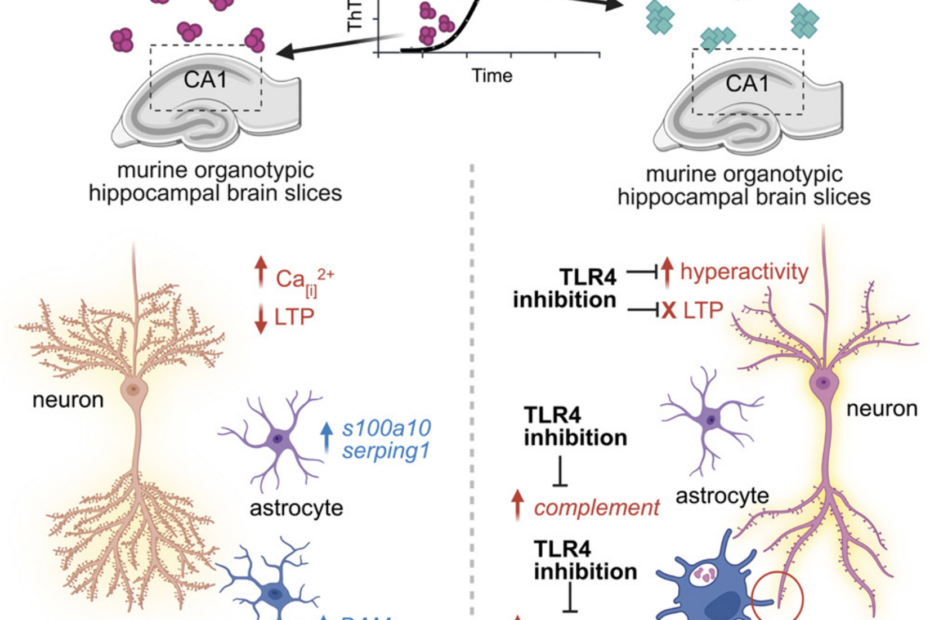
Divergent toxicity mechanisms of amyloid-beta aggregates arising from a single aggregation reaction
We are pleased to have contributed to a new study, led by Juan Varela and his team, that provides fresh insights into how Alzheimer’s disease develops. The research shows that different forms of amyloid-beta—a protein closely linked to the disease—affect the brain in different ways as they accumulate. Early-stage aggregates disrupt communication between nerve cells, while later forms trigger harmful inflammation and the loss of connections between neurons. By revealing how distinct amyloid species drive different stages of the disease, the study offers a clearer picture of Alzheimer’s progression and may help guide the development of future therapies that target multiple disease mechanisms.